One of the three keys I’ve identified for supporting creativity in the classroom is teaching the creative methodologies of the disciplines you are teaching. “Teaching the creative methodologies” is a fancy phrase for the idea that, whatever subject you are teaching, you teach not just the “what” of the subject but the “how” as well. … Continue reading
Filed under Lesson Ideas …
30 Days to Creative Bliss: A Creative Blast from the Past
When we talk to young people about the dangers of posting potentially damaging photos and commentary on social media, one of the key arguments is, “Once you post it, it never goes away.” Fortunately for us, the flip side of this statement is, “When there’s good stuff online, it often stays there a long time.” … Continue reading
Students as Questioners 4: Five Questions for Thinking
One of my favorite tools for helping students move from absorbers to questioners comes from Deborah Meier. She cites five Habits of Mind underlying Boston’s Mission Hill School, each of which can be framed as a question. Here, from Meier’s 2009 article “Democracy at Risk” are the five questions that she believes can define a … Continue reading
It’s Raining Bats and Frogs!
Halloween is almost here, and along with creative opportunities for scary story writing (see here and here), come some silly-story options as well. I’ve written previously about Halloween parodies of favorite tales. I also love the story of Delia the witch in It’s Raining Bats and Frogs. When Delia is frustrated by rain on the … Continue reading
Students as Questioners 3: Ask A More Beautiful Question
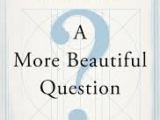
One of the books that has helped pushed questioning to the front-and-center of the education agenda is Warren Berger’s A More Beautiful Question. A More Beautiful Question is not a book about education specifically, but a book about the way raising questions changes human learning, interaction, and invention. This is a book focused on innovation, … Continue reading
Imaginary Musical Instruments: Hearing the Sounds in My Brain
Curating a museum of imaginary things could be an interesting challenge. What, of all that the human imagination can call forth, would be included? For Deirdre Loughridge and Thomas Patteson, the answer was a museum of imaginary instruments. The co-curators’ collection is not all light-hearted fantasy. The Museum of Imaginary Musical Instruments is a serious examination … Continue reading
Students as Questioners 2: Make Just One Change
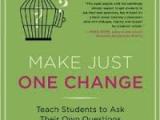
Dan Rothstein and Luz Santana’s book, Make Just One Change, suggests the one strategy that will transform education is teaching students to ask their own questions. Interestingly, their journey to this conclusion began, not with students, but with parents. Working with parents in a dropout prevention program in the 1980s, the authors repeatedly heard from … Continue reading
Something Rotten: A Shakespearean Rock Star
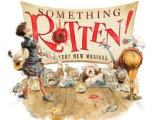
Was Shakespeare a rock star? He was popular in his time, but what if his reputation then paralleled celebrity today? That’s one of the questions underlying the current Broadway musical sensation Something Rotten, the story of Nick and Nigel Bottom, would-be playwrights stuck in the shadow of the Bard of Avon. The sound track is … Continue reading
Students as Questioners 1: What’s a Question?
Questions. We ask them when we need directions. We ask them when we don’t understand. Sometimes we ask questions in outrage, other times we ask them in curiosity and wonder. Sometimes questions are rhetorical, other times they are urgent. If we want to help students be questioners, we need to help them understand the types … Continue reading
Color Changing Milk: Think Like a Scientist
Teaching students to “think like a scientist” is a tricky thing. Many of us have experienced science classes that required memorizing seemingly irrelevant from ancient textbooks. On the other hand, other activities include spectacular demonstrations or hands-on activities, but do not lead students to scientific understanding, operating more than a magic show than a lesson. … Continue reading