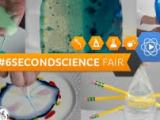
While working on my “Ideas are Scary” post, I came across one more irresistible item from General Electric—a 6-second science fair. For a week last August, General Electric challenged young people to create 6-second videos using the Vine app and post them on Twitter under #6SecondScience. Talk about a social media bonanza! While the fair … Continue reading
Filed under Science Lessons …
Sneaky Fun, Sneaky Science
What child doesn’t love being a bit sneaky? From stealthily creeping down the hall way-too-early on Christmas morning to sneaking a peek at a friend’s nervous prom date, I’ve gathered seemingly valuable data that way! Fortunately, with his Sneaky Uses for Everyday Things, Cy Tymony has raised sneakiness to a new level and proposes “sneaky” … Continue reading
Of Wolves, Rivers, and the Interconnectedness of Things
Every now and then I run into something that reminds me of the interconnectedness of the world around us—and the wonder of it. I’m sure many of you have see the video making the rounds of social media titled “How Wolves Change Rivers.” If not, just stop now for 4.3 minutes and prepare to be … Continue reading
Lost Ladybugs and Blooming Scientists
One of the great challenges of helping students envision creativity in science is teaching science in ways that are more like, well, science. So much of science education is prepackaged in ways that are designed to make the questions clear and the results predictable—conditions actual scientists rarely experience. And besides, where’s the fun in giving … Continue reading
How Do Scientists Think?
When I was in school we learned—or thought we learned—how scientists worked. Scientists, we were told, followed the 5-step scientific method. First they came up with a question, then they designed an experiment, collected data, and drew conclusions to answer the question. I can easily envision my scientist friends shaking their heads and saying, “If … Continue reading
How Do We Measure Winter?
It has been quite a winter in Michigan, and across the central and eastern United States. Newscasters are having fun describing the many ways in which this winter has been exceptional. This, of course, brings to mind the question, “How do you measure winter?” I know it is an odd question to consider at the … Continue reading
Creative Labeling
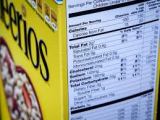
Creativity and problem solving can be found in the most unexpected places. Have you ever looked at the nutrition labels on cereal or ketchup and thought about their design? I hadn’t, until I listed to an interview with Burkey Belser, the man who designed them. Because new nutrition labels are in the works, he is … Continue reading
Teaching about Weather? Spark It!
The Spark website, sponsored by the National Center for Atmospheric Research (NCAR) can be your center for learning materials on weather, climate and related atmospheric sciences. There’s lots of basic information and class activities, but my one of my favorite parts is the interactive simulations. Simulations allow students to explore “what if” questions that are … Continue reading
All Things STEAM: Science in the Library
I was tempted to title this post, “It’s Not Your Mother’s Library,” because the wonderful learning environment described in Amy Koester’s “All Things STEAM” is a long way from the rigidly silent libraries of my childhood. Instead, her website is a wonderful exercise in multi-layered creativity. Amy has used her own creativity to envision a … Continue reading
More Dino Silliness: The Dinosaurs Night Before Christmas
Just as Dinovember ended, I discovered a new silly Dinosaur delight, Anne Muecke’s The Dinosaurs Night Before Christmas. I’ve already written about the many versions of Clement Clarke Moore’s classic poem A Visit from Saint Nicholas, and the ways they can be used to teach about parody. But I keep discovering new “Night Before” books … Continue reading